
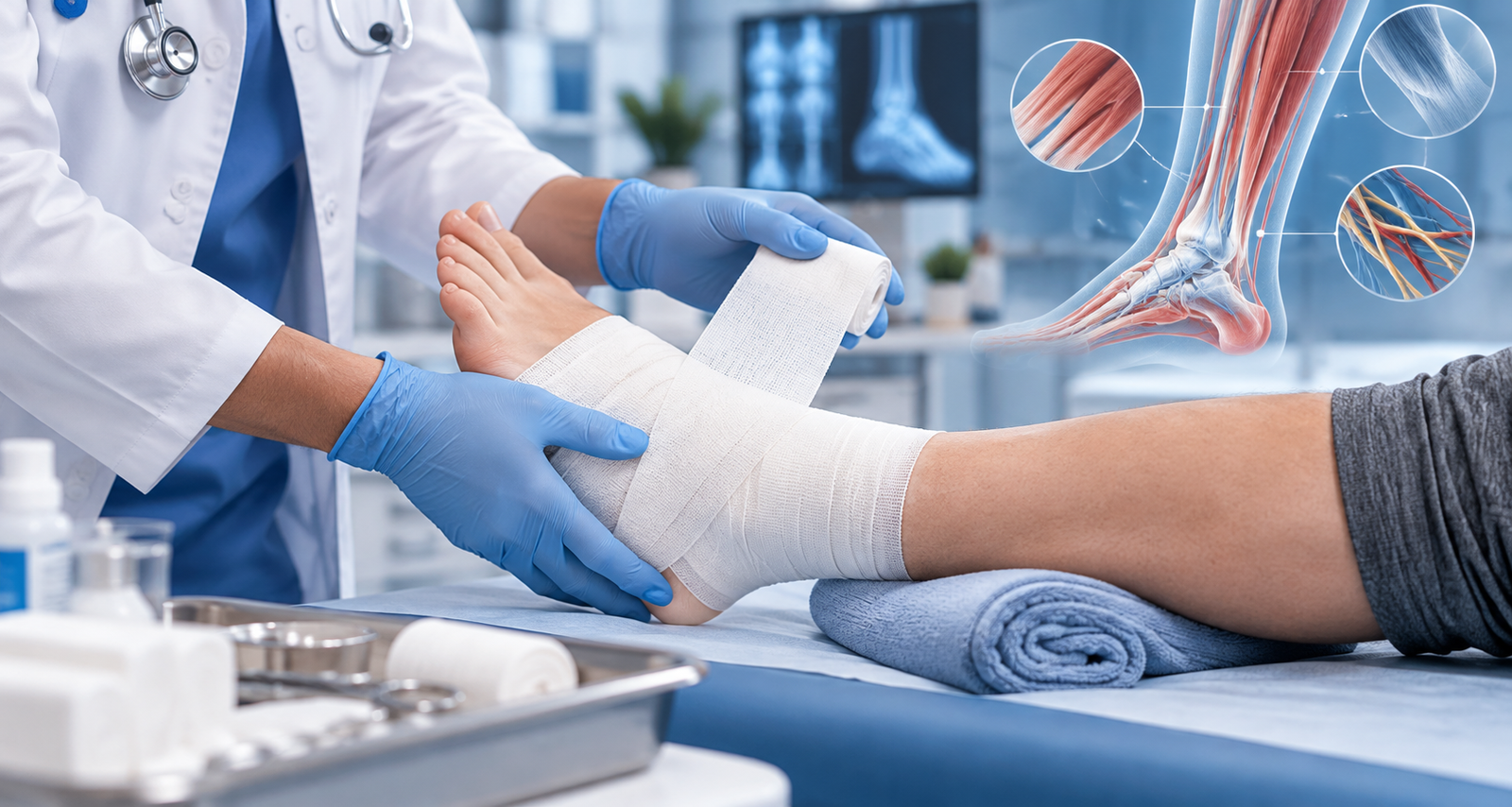
Soft Tissue Trauma – Specialized Care for Skin, Muscle, Tendon and Reconstructive Injuries

Soft Tissue Trauma – Specialized Care for Skin, Muscle, Tendon and Reconstructive Injuries

Soft tissue injuries can affect the skin, muscles, tendons, nerves, blood vessels and other structures surrounding bones and joints. These injuries may occur after road accidents, falls, crush injuries, burns, industrial accidents or deep cuts.

Patients searching for treatment related to Soft Tissue Trauma should focus on timely assessment, wound management, tissue preservation, reconstruction and rehabilitation when required.

Samford Burn and Plastic Surgery, located near Kokar Chowk on Hazaribagh Road, Ranchi, provides consultation for soft tissue injuries, complex wounds, trauma reconstruction, hand and leg injuries, burns and reconstructive concerns.

The right treatment for Soft Tissue Trauma depends on the location, depth, severity and structures involved.

What Is Soft Tissue Trauma?

Soft tissue trauma refers to injury affecting tissues other than bone.

These may include:

  • Skin
  • Fat
  • Muscles
  • Tendons
  • Ligaments
  • Nerves
  • Blood vessels
  • Fascia

Some soft tissue injuries are minor, while others may involve extensive tissue loss and require reconstructive care.

Patients with significant Soft Tissue Trauma should receive medical evaluation to determine the extent of injury.

Common Causes of Soft Tissue Trauma

Soft tissue injuries may result from:

  • Road traffic accidents
  • Machinery injuries
  • Falls
  • Crush injuries
  • Deep cuts
  • Industrial accidents
  • Burns
  • Sports injuries

The treatment approach varies according to the mechanism and severity of injury.

Why Soft Tissue Injuries Can Be Serious

A wound may appear to involve only skin but can extend deeper.

Severe Soft Tissue Trauma may damage:

  • Muscles
  • Tendons
  • Nerves
  • Blood vessels
  • Important underlying structures

In some cases, tissue loss can leave bone or tendon exposed.

This may require reconstructive treatment rather than simple wound closure.

Open Wounds

Open wounds may be caused by sharp objects, accidents or machinery.

Treatment may include:

  • Wound cleaning
  • Removal of damaged tissue when necessary
  • Infection management
  • Dressing
  • Surgical closure
  • Reconstruction

Patients with deep Soft Tissue Trauma should seek medical attention, especially if the wound affects movement or sensation.

Crush Injuries

Crush injuries can damage several tissue layers simultaneously.

They may affect:

  • Skin
  • Muscles
  • Blood vessels
  • Nerves
  • Tendons

The visible injury may not always show the full extent of deeper damage.

A patient with major Soft Tissue Trauma caused by crushing may require urgent medical assessment.

Degloving Injuries

A degloving injury occurs when the skin and soft tissues separate from deeper structures.

These injuries may result from severe accidents or machinery trauma.

Depending on severity, management may include:

  • Wound cleaning
  • Tissue assessment
  • Skin grafting
  • Flap reconstruction
  • Other reconstructive procedures

Severe degloving injuries are an example of Soft Tissue Trauma that may require specialist reconstructive care.

Soft Tissue Trauma of the Hand

Hand injuries can be particularly complex.

The hand contains tendons, nerves, blood vessels and muscles within a small area.

Soft Tissue Trauma of the hand may cause:

  • Deep wounds
  • Loss of movement
  • Numbness
  • Tissue loss
  • Tendon injury
  • Nerve injury

Plastic and reconstructive surgery may be required in selected cases.

Soft Tissue Trauma of the Leg

Serious leg injuries may involve skin and muscle loss along with fractures.

Patients may require treatment from both Orthopaedics and Plastic Surgery.

Soft Tissue Trauma of the leg may need:

  • Wound management
  • Skin grafting
  • Soft tissue reconstruction
  • Flap coverage
  • Rehabilitation

The treatment depends on the exact injury.

Tendon Injuries

Tendons connect muscles to bones and help produce movement.

They may be injured by:

  • Deep cuts
  • Machinery accidents
  • Crush injuries
  • Trauma

Symptoms can include weakness or inability to move a joint or finger normally.

Some cases of Soft Tissue Trauma involving tendons may require surgical repair.

Nerve Injuries

Nerve damage may occur with deep wounds or crush injuries.

Possible symptoms include:

  • Numbness
  • Tingling
  • Weakness
  • Reduced sensation

A specialist may evaluate whether nerve repair or reconstruction is appropriate as part of treatment for Soft Tissue Trauma.

Blood Vessel Injuries

Severe trauma can affect circulation.

Warning signs may include:

  • Heavy bleeding
  • Cold skin
  • Pale or discoloured limb
  • Reduced circulation

These symptoms require urgent medical assessment.

Treatment for severe Soft Tissue Trauma may require coordination with additional surgical specialties.

Soft Tissue Loss

Some injuries result in loss of skin or deeper tissue.

If important structures are exposed, wound closure may require reconstruction.

Treatment options may include:

  • Skin grafting
  • Local flaps
  • Regional flaps
  • Soft tissue reconstruction

The goal is to provide stable coverage and support healing.

Skin Grafting

Skin grafting may be used in selected cases of Soft Tissue Trauma.

A skin graft involves taking healthy skin from another area and placing it over the wound.

It may be considered when:

  • Skin loss is significant
  • The wound is suitable for grafting
  • Surface coverage is required

Not every wound is suitable for a graft.

Flap Reconstruction

Flap reconstruction provides tissue coverage while maintaining its blood supply.

It may be considered when:

  • Bone is exposed
  • Tendons are exposed
  • Deep wounds require durable coverage
  • Skin grafting alone may not be sufficient

Flap procedures can be an important option in complex Soft Tissue Trauma.

Burns and Soft Tissue Damage

Burn injuries may also affect deeper soft tissues.

Deep burns can lead to:

  • Tissue loss
  • Wounds
  • Scarring
  • Contractures
  • Functional limitations

Patients with burn-related Soft Tissue Trauma may require burn care and later reconstructive treatment.

Complex Wounds

A complex wound may be difficult to heal because of:

  • Tissue loss
  • Infection
  • Poor circulation
  • Previous surgery
  • Associated trauma

Patients with complex Soft Tissue Trauma may need reconstructive evaluation.

The treatment plan should address both the wound and any underlying medical problems.

Infection Risk

Open wounds can become infected.

Possible signs include:

  • Redness
  • Swelling
  • Fever
  • Discharge
  • Increasing pain
  • Worsening wound appearance

Patients with Soft Tissue Trauma should follow wound-care instructions and seek medical attention if infection is suspected.

Trauma Reconstruction

Reconstructive surgery may help repair tissue damaged by severe injury.

Trauma reconstruction may involve:

  • Skin grafting
  • Flap coverage
  • Scar revision
  • Soft tissue reconstruction
  • Contracture release

Patients with major Soft Tissue Trauma may benefit from reconstructive consultation when direct wound closure is not possible.

Role of Plastic Surgery

Plastic surgeons may be involved in soft tissue injury management when the injury causes:

  • Tissue loss
  • Complex wounds
  • Scars
  • Exposed structures
  • Functional problems

Plastic and reconstructive expertise can be important in complex Soft Tissue Trauma involving the hand, leg or other body areas.

Role of Orthopaedics

If the injury also involves fractures or joints, Orthopaedic care may be required.

In such cases, treatment may involve coordination between:

  • Orthopaedics
  • Plastic Surgery
  • Emergency Medicine
  • Radiology
  • Anaesthesia
  • Physiotherapy

This multidisciplinary approach may be important for severe Soft Tissue Trauma.

Diagnostic Evaluation

Assessment may involve:

  • Physical examination
  • Wound inspection
  • Circulation testing
  • Sensation testing
  • Movement assessment
  • X-ray
  • Additional imaging

These evaluations help determine the extent of tissue injury.

Does Every Soft Tissue Injury Need Surgery?

No.

Minor soft tissue injuries may heal with conservative treatment.

Surgery may be considered when there is:

  • Severe tissue loss
  • Deep wounds
  • Exposed bone or tendon
  • Tendon injury
  • Nerve injury
  • Complex wounds

The treatment of Soft Tissue Trauma should be individualized.

Recovery After Soft Tissue Trauma

Recovery depends on:

  • Injury severity
  • Area involved
  • Type of treatment
  • Patient health
  • Rehabilitation needs

Patients may receive instructions for:

  • Wound care
  • Dressing
  • Medication
  • Activity restriction
  • Physiotherapy
  • Follow-up visits

Recovery from significant Soft Tissue Trauma can take several weeks or longer.

Importance of Rehabilitation

Rehabilitation may be necessary when trauma affects movement or strength.

Physiotherapy may help improve:

  • Range of motion
  • Muscle strength
  • Hand function
  • Walking ability
  • Scar flexibility

Rehabilitation can be an important part of recovery after Soft Tissue Trauma.

When Should You Seek Medical Attention?

Prompt evaluation is recommended for:

  • Deep wounds
  • Severe bleeding
  • Tissue loss
  • Numbness
  • Loss of movement
  • Crush injuries
  • Exposed deeper structures
  • Signs of infection

Major Soft Tissue Trauma should not be managed only with home care.

Soft Tissue Trauma Care at Samford Burn and Plastic Surgery

Samford Burn and Plastic Surgery provides consultation for:

  • Soft tissue injuries
  • Complex wounds
  • Hand trauma
  • Leg trauma
  • Burns
  • Scar contractures
  • Skin grafting assessment
  • Trauma reconstruction

Patients seeking care for Soft Tissue Trauma in Ranchi can contact the centre for specialist evaluation.

Location

Samford Burn and Plastic Surgery
Hazaribagh Rd, Near Kokar Chowk
Ranchi, Jharkhand – 834001

Phone: 073600 80041

Frequently Asked Questions

What is Soft Tissue Trauma?

Soft tissue trauma refers to injuries involving skin, muscles, tendons, ligaments, nerves, blood vessels and related tissues.

What causes soft tissue trauma?

Common causes include road accidents, falls, crush injuries, deep cuts, burns and industrial accidents.

Can soft tissue trauma require surgery?

Yes. Severe injuries involving tissue loss, exposed structures, tendons or nerves may require surgery or reconstruction.

What is soft tissue reconstruction?

Soft tissue reconstruction involves procedures used to restore tissue coverage after significant damage or tissue loss.

Can skin grafting be used?

Yes. Skin grafting may be suitable for selected wounds with skin loss.

What is flap reconstruction?

Flap reconstruction uses tissue with its blood supply to cover deeper wounds or exposed structures.

Can soft tissue trauma affect nerves?

Yes. Deep injuries may damage nerves and cause numbness, weakness or reduced sensation.

Is physiotherapy needed after soft tissue trauma?

Rehabilitation may be recommended when the injury affects movement or strength.

Where is Samford Burn and Plastic Surgery located?

It is located near Kokar Chowk on Hazaribagh Road, Ranchi, Jharkhand – 834001.

How can I book an appointment?

Call 073600 80041 for consultation and appointment information.

Conclusion

Soft tissue injuries can range from minor wounds to serious trauma involving muscles, tendons, nerves, blood vessels and significant tissue loss.

Patients with Soft Tissue Trauma should seek appropriate medical evaluation when wounds are deep, movement is affected, tissue is lost or circulation and sensation are compromised.

Samford Burn and Plastic Surgery provides consultation for soft tissue injuries, complex wounds, hand and leg trauma, skin grafting and reconstructive concerns near Kokar Chowk, Ranchi.

For major accidents, severe bleeding or circulation problems, emergency medical treatment should remain the first priority.

Samford Burn and Plastic Surgery
Hazaribagh Rd, Near Kokar Chowk
Ranchi, Jharkhand – 834001
Phone: 073600 80041
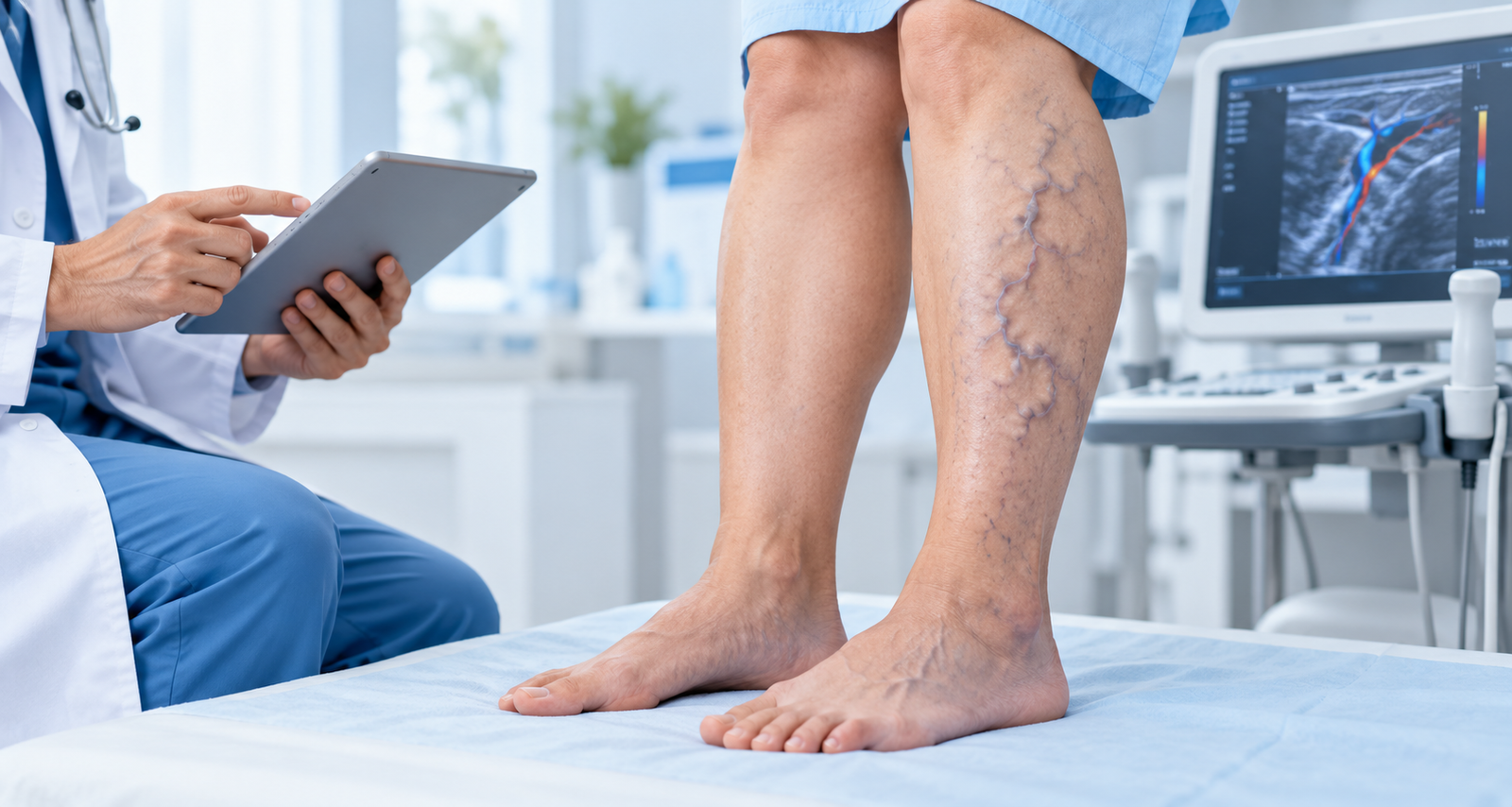
Leg Trauma Treatment in Ranchi – Specialized Care for Soft Tissue Injuries, Complex Wounds and Reconstruction

Leg Trauma Treatment in Ranchi – Specialized Care for Soft Tissue Injuries, Complex Wounds and Reconstruction

Serious leg injuries can involve much more than fractures. Road accidents, falls, machinery injuries, crush trauma and deep wounds may damage the skin, muscles, nerves, blood vessels and other soft tissues around the lower limb. In these cases, patients may require both orthopaedic and reconstructive care.

Patients searching for Leg Trauma Treatment in Ranchi should focus on timely medical assessment, wound management, soft tissue reconstruction, rehabilitation and access to multidisciplinary care.

Samford Burn and Plastic Surgery, located near Kokar Chowk on Hazaribagh Road, Ranchi, provides consultation for leg trauma, complex wounds, soft tissue injuries, scars and reconstructive concerns.

The correct approach to Leg Trauma Treatment in Ranchi depends on the severity of the injury, structures involved and the overall condition of the patient.

What Is Leg Trauma?

Leg trauma refers to injuries affecting the thigh, knee region, lower leg, ankle or surrounding soft tissues.

Common causes include:

  • Road traffic accidents
  • Falls
  • Industrial accidents
  • Machinery injuries
  • Crush injuries
  • Deep cuts
  • Sports injuries
  • Burns

Patients may require Leg Trauma Treatment in Ranchi when an injury causes open wounds, tissue loss, functional problems or damage to deeper structures.

Why Leg Injuries Can Be Complex

The leg contains multiple important structures, including:

  • Skin
  • Muscles
  • Tendons
  • Nerves
  • Blood vessels
  • Bones
  • Joints

A serious injury may affect several of these at the same time.

For example, a road accident may result in a fracture along with major soft tissue loss. In such cases, Leg Trauma Treatment in Ranchi may require coordination between Orthopaedics and Plastic Surgery.

Open Leg Wounds

Open wounds can range from superficial cuts to deep injuries involving muscles, tendons or bone.

Patients may need:

  • Wound cleaning
  • Infection control
  • Dressing
  • Surgical repair
  • Reconstruction

A specialist providing Leg Trauma Treatment in Ranchi can assess whether simple closure is possible or whether reconstructive treatment is required.

Soft Tissue Injury of the Leg

Soft tissue trauma can affect:

  • Skin
  • Fat
  • Muscles
  • Fascia
  • Tendons
  • Nerves

These injuries may occur due to accidents, crush injuries or deep wounds.

Leg Trauma Treatment in Ranchi may include wound care, tissue repair and reconstruction depending on severity.

Crush Injuries

Crush injuries can damage multiple tissue layers at once.

They may affect:

  • Skin
  • Muscles
  • Nerves
  • Blood vessels
  • Bones

Patients with major crush injuries should receive prompt medical care.

A specialist may later consider Leg Trauma Treatment in Ranchi that includes soft tissue reconstruction, wound coverage or scar management.

Road Accident Injuries

Road traffic accidents are a common cause of serious leg trauma.

Patients may have:

  • Open fractures
  • Tissue loss
  • Deep wounds
  • Exposed bone
  • Muscle damage
  • Nerve injury

In these situations, Leg Trauma Treatment in Ranchi may involve multidisciplinary care.

Orthopaedic surgeons may address bone injuries, while plastic and reconstructive surgeons may provide wound coverage and soft tissue reconstruction.

Soft Tissue Loss

Some injuries lead to significant loss of skin or soft tissue.

This can leave deeper structures exposed.

In such cases, Leg Trauma Treatment in Ranchi may involve:

  • Skin grafting
  • Local flap coverage
  • Soft tissue reconstruction
  • Wound closure procedures

The choice depends on wound size, location and tissue condition.

Skin Grafting for Leg Injuries

Skin grafting may be used to cover selected wounds.

A graft involves transferring healthy skin from another part of the body to the injured area.

Skin grafting may be considered as part of Leg Trauma Treatment in Ranchi when:

  • Skin loss is significant
  • The wound is suitable
  • Tissue coverage is required

Not every wound is suitable for grafting.

Flap Reconstruction

Some wounds require stronger tissue coverage.

Flap reconstruction involves moving tissue with its own blood supply to cover a defect.

This may be considered when:

  • Bone is exposed
  • Tendons are exposed
  • Deep tissues need coverage
  • Skin grafting is insufficient

Flap procedures can be an important part of advanced Leg Trauma Treatment in Ranchi.

Exposed Bone and Tendon

Open trauma can sometimes leave bones or tendons exposed.

This can increase the risk of infection and interfere with healing.

Patients with such injuries may require reconstructive evaluation.

Leg Trauma Treatment in Ranchi may include appropriate wound coverage to protect these structures and support recovery.

Nerve Injuries

Trauma to the leg may damage nerves.

Symptoms may include:

  • Numbness
  • Tingling
  • Weakness
  • Reduced sensation
  • Difficulty with movement

A specialist can assess whether the nerve injury requires further treatment.

In complex cases, nerve-related assessment may form part of Leg Trauma Treatment in Ranchi.

Blood Vessel Injuries

Severe trauma may affect blood circulation.

Warning signs can include:

  • Heavy bleeding
  • Pale or cold limb
  • Reduced pulse
  • Severe swelling

These signs require urgent medical attention.

A patient should not delay emergency care while searching online for Leg Trauma Treatment in Ranchi.

Leg Burns

Burn injuries can also affect the lower limb.

Deep burns may cause:

  • Wounds
  • Scarring
  • Tightness
  • Contractures
  • Limited movement

Patients may require acute burn care and, later, reconstructive treatment.

Leg Trauma Treatment in Ranchi for burn-related injuries may include scar management and reconstruction.

Scar Contractures

Scars around the knee, ankle or other joints may become tight.

This can limit movement and affect walking.

Treatment may involve:

  • Physiotherapy
  • Scar management
  • Contracture release
  • Reconstruction

A specialist providing Leg Trauma Treatment in Ranchi can assess whether surgery is required.

Complex Wounds

Some trauma wounds heal slowly because of:

  • Infection
  • Tissue loss
  • Poor blood supply
  • Associated fractures
  • Previous surgery

Complex wounds may require advanced wound care or reconstruction.

Patients searching for Leg Trauma Treatment in Ranchi should consider specialist evaluation when a wound is not healing properly.

Multidisciplinary Care

Severe leg trauma often requires several medical specialties.

These may include:

  • Emergency Medicine
  • Orthopaedics
  • Plastic Surgery
  • Radiology
  • Anaesthesia
  • Critical Care
  • Physiotherapy

This team approach can be important for successful Leg Trauma Treatment in Ranchi.

Role of Reconstructive Surgery

Reconstructive surgery may help restore tissue coverage and support function.

Procedures may include:

  • Skin grafting
  • Flap coverage
  • Scar revision
  • Soft tissue reconstruction
  • Contracture release

The goal of Leg Trauma Treatment in Ranchi is often to support healing and preserve mobility where possible.

Diagnostic Evaluation

Depending on the injury, evaluation may include:

  • Physical examination
  • Circulation assessment
  • Sensation testing
  • X-ray
  • CT scan
  • Other imaging

These investigations help determine the extent of damage.

Does Every Leg Injury Need Surgery?

No.

Minor injuries may be managed without surgery.

Surgery may be considered when there is:

  • Major tissue loss
  • Exposed bone or tendon
  • Complex wounds
  • Severe fractures
  • Scar contractures
  • Reconstructive needs

The exact treatment depends on the individual case.

Recovery After Leg Trauma

Recovery may involve:

  • Wound care
  • Dressings
  • Medication
  • Limb elevation
  • Activity restrictions
  • Physiotherapy
  • Rehabilitation
  • Follow-up visits

Patients undergoing Leg Trauma Treatment in Ranchi should follow their medical team’s instructions carefully.

Importance of Physiotherapy

Physiotherapy may help restore:

  • Joint movement
  • Muscle strength
  • Walking ability
  • Balance
  • Functional mobility

Rehabilitation can be an important part of Leg Trauma Treatment in Ranchi, especially after surgery or prolonged immobilization.

Possible Complications

Serious leg trauma may lead to complications such as:

  • Infection
  • Delayed wound healing
  • Scar formation
  • Stiffness
  • Weakness
  • Functional limitation

Regular follow-up can help monitor and address these concerns.

Why Hospital Infrastructure Matters

Complex leg trauma may require:

  • Emergency services
  • Operation theatre
  • Anaesthesia
  • Radiology
  • Orthopaedics
  • Plastic Surgery
  • Critical Care
  • Physiotherapy

Patients searching for Leg Trauma Treatment in Ranchi should consider both specialist expertise and available hospital support.

Leg Trauma Care at Samford Burn and Plastic Surgery

Samford Burn and Plastic Surgery provides consultation for leg trauma and reconstructive concerns, including:

  • Deep wounds
  • Soft tissue loss
  • Crush injuries
  • Burn-related injuries
  • Complex wounds
  • Scar contractures
  • Skin grafting assessment
  • Soft tissue reconstruction

Patients looking for Leg Trauma Treatment in Ranchi can contact the centre for specialist consultation and treatment planning.

Location

Samford Burn and Plastic Surgery
Hazaribagh Rd, Near Kokar Chowk -+
Ranchi, Jharkhand – 834001

Phone: 073600 80041

Frequently Asked Questions

What is Leg Trauma Treatment in Ranchi?

Leg trauma treatment includes assessment and management of injuries involving skin, muscles, nerves, blood vessels, bones and surrounding soft tissues.

When should I seek treatment for leg trauma?

Seek urgent medical care for severe bleeding, open wounds, exposed bone, loss of sensation, major swelling, circulation problems or inability to move the limb.

Can plastic surgeons treat leg trauma?

Yes. Plastic surgeons may help manage soft tissue loss, complex wounds, skin grafting and reconstructive needs after leg trauma.

Can skin grafting be used for leg injuries?

Yes. Selected wounds may be suitable for skin grafting depending on the wound bed and tissue condition.

What is flap reconstruction?

Flap reconstruction uses tissue with its own blood supply to cover deep wounds or exposed structures.

Can leg trauma cause long-term scars?

Yes. Significant injuries may lead to scars or contractures that require further treatment.

Is physiotherapy important after leg trauma?

Yes. Rehabilitation can help restore movement, strength and walking ability.

Does every leg injury require surgery?

No. Surgery is required only in selected cases depending on the severity and structures involved.

Where is Samford Burn and Plastic Surgery located?

It is located near Kokar Chowk on Hazaribagh Road, Ranchi, Jharkhand – 834001.

How can I book an appointment?

Call 073600 80041 for consultation and appointment information.

Conclusion

Serious leg injuries can involve skin, muscles, nerves, blood vessels and bones, and some cases require multidisciplinary treatment.

Patients searching for Leg Trauma Treatment in Ranchi should prioritize timely assessment, appropriate wound care, reconstructive support and rehabilitation.

Samford Burn and Plastic Surgery provides consultation for leg trauma, complex wounds, soft tissue injuries and reconstructive concerns near Kokar Chowk, Ranchi.

For severe bleeding, circulation problems, open fractures or major trauma, urgent medical care should remain the priority.

Samford Burn and Plastic Surgery
Hazaribagh Rd, Near Kokar Chowk
Ranchi, Jharkhand – 834001
Phone: 073600 80041

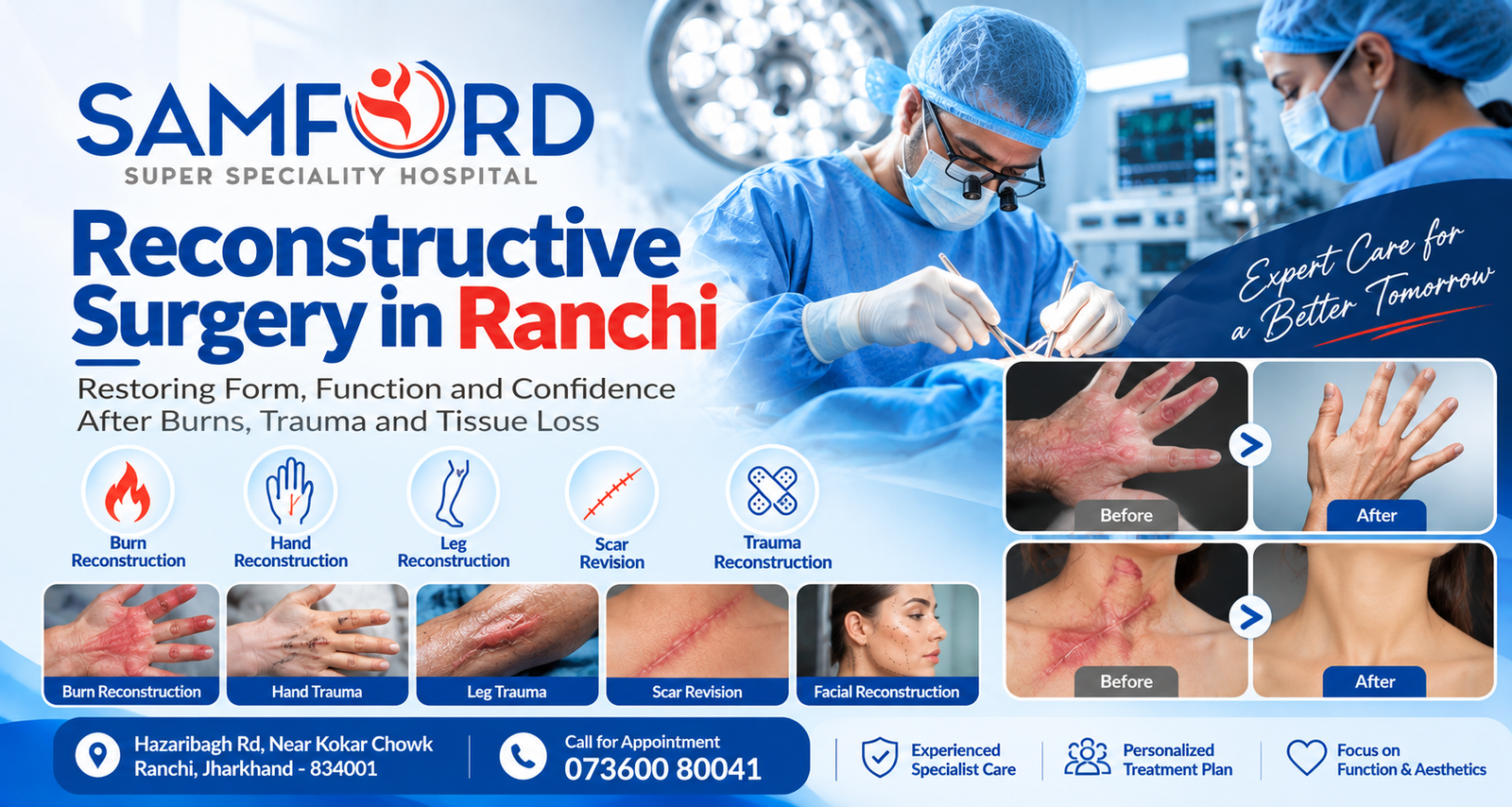
Reconstructive Surgery in Ranchi – Restoring Form and Function After Burns, Trauma and Tissue Loss

Reconstructive Surgery in Ranchi – Restoring Form and Function After Burns, Trauma and Tissue Loss

Reconstructive surgery is an important branch of plastic surgery that focuses on restoring form, function and tissue coverage after burns, trauma, surgery, wounds or other medical conditions. Patients searching for Reconstructive Surgery in Ranchi may need specialist evaluation for burn scars, soft tissue defects, hand injuries, leg trauma, complex wounds or post-traumatic deformities.

Samford Burn and Plastic Surgery, located near Kokar Chowk on Hazaribagh Road, Ranchi, provides consultation for reconstructive, burn, trauma and plastic surgery concerns.

The right approach to Reconstructive Surgery in Ranchi depends on the type of tissue damage, area involved, functional limitation and the patient’s overall health.

What Is Reconstructive Surgery?

Reconstructive surgery aims to repair or restore damaged body structures.

Unlike purely cosmetic surgery, the main goal is often to improve function, restore tissue coverage or correct a defect caused by injury, burns or disease.

Patients considering Reconstructive Surgery in Ranchi may require treatment after:

  • Burn injuries
  • Road accidents
  • Hand trauma
  • Leg trauma
  • Soft tissue loss
  • Complex wounds
  • Previous surgery
  • Scar contractures
  • Tissue defects

The exact procedure depends on the condition.

Reconstructive Surgery After Burns

Burn injuries can damage skin and deeper tissues.

After the initial wound heals, some patients may develop:

  • Tight scars
  • Contractures
  • Restricted movement
  • Tissue deformity
  • Visible scarring

Patients seeking Reconstructive Surgery in Ranchi after burns may require evaluation for scar release, grafting or tissue reconstruction.

The goal may be to improve both function and appearance.

Burn Contracture Reconstruction

A burn contracture develops when scar tissue becomes tight and restricts movement.

Contractures may affect:

  • Hands
  • Elbows
  • Knees
  • Neck
  • Face
  • Shoulders

In selected cases, Reconstructive Surgery in Ranchi may involve scar release and reconstruction to improve movement.

The procedure depends on the location and severity of the contracture.

Trauma Reconstruction

Road accidents, industrial injuries, falls and crush injuries can lead to significant tissue loss.

Patients may require Reconstructive Surgery in Ranchi when trauma results in:

  • Open wounds
  • Exposed tissue
  • Soft tissue loss
  • Severe scars
  • Functional problems
  • Complex defects

Trauma reconstruction may require coordination between Plastic Surgery, Orthopaedics and other specialties.

Hand Reconstruction

The hand contains important structures such as:

  • Tendons
  • Nerves
  • Blood vessels
  • Muscles
  • Skin
  • Bones

Severe injuries can affect movement and sensation.

Patients may require Reconstructive Surgery in Ranchi after hand trauma involving soft tissue loss, deep wounds or scar contractures.

The treatment approach depends on the structures affected.

Leg Reconstruction

Major leg trauma may result in wounds or soft tissue defects.

In such cases, Reconstructive Surgery in Ranchi may help provide tissue coverage and support healing.

Leg reconstruction may involve:

  • Skin grafting
  • Local tissue rearrangement
  • Flap reconstruction
  • Scar revision
  • Wound coverage

In many cases, Orthopaedics and Plastic Surgery work together.

Soft Tissue Reconstruction

Soft tissue includes:

  • Skin
  • Fat
  • Muscles
  • Fascia
  • Other supporting tissues

Damage may occur due to trauma, burns or surgery.

Patients searching for Reconstructive Surgery in Ranchi may need soft tissue reconstruction to cover wounds and restore damaged areas.

The exact technique is selected based on the size and location of the defect.

Skin Grafting

Skin grafting is one of the common reconstructive techniques used in selected cases.

A graft involves using healthy skin from another area of the body to cover a wound.

Patients considering Reconstructive Surgery in Ranchi may require skin grafting for:

  • Burn wounds
  • Tissue loss
  • Large wounds
  • Reconstructive defects

Not every wound requires grafting.

Flap Reconstruction

Flap surgery involves moving tissue with its blood supply to cover a defect.

This may be considered when:

  • Wounds are deep
  • Important structures are exposed
  • Tissue coverage is inadequate
  • Skin grafting alone may not be sufficient

A specialist providing Reconstructive Surgery in Ranchi can evaluate whether flap reconstruction is appropriate.

Scar Revision

Scars may become:

  • Raised
  • Thick
  • Tight
  • Painful
  • Uneven
  • Functionally restrictive

Patients may seek Reconstructive Surgery in Ranchi for scar revision when scars interfere with movement or cause significant cosmetic concerns.

Scar treatment depends on the type, age and location of the scar.

Reconstructive Surgery After Previous Surgery

Some patients may require reconstruction after previous surgical procedures.

This may be considered when there is:

  • Tissue loss
  • Poor wound healing
  • Scar problems
  • Functional limitation
  • Soft tissue defects

A specialist offering Reconstructive Surgery in Ranchi may evaluate whether further corrective treatment is appropriate.

Complex Wound Reconstruction

Complex wounds may develop due to:

  • Trauma
  • Infection
  • Surgery
  • Burns
  • Poor healing

Patients with difficult wounds may require Reconstructive Surgery in Ranchi to provide tissue coverage and support healing.

Treatment should always be based on the underlying cause of the wound.

Reconstructive Surgery and Function

One of the key goals of reconstructive surgery is to improve function.

For example:

  • Hand reconstruction may help restore movement
  • Burn contracture release may improve joint mobility
  • Leg reconstruction may support wound closure
  • Scar revision may reduce restriction

Patients searching for Reconstructive Surgery in Ranchi should discuss both functional and cosmetic goals during consultation.

Reconstructive Surgery vs Cosmetic Surgery

These two areas are related but different.

Reconstructive Surgery

The main aim is to restore damaged tissue or function.

Cosmetic Surgery

The main aim is to improve appearance.

Some procedures can involve both objectives.

A patient undergoing Reconstructive Surgery in Ranchi may also experience cosmetic improvement, but the primary goal is often functional restoration.

Importance of Medical Evaluation

Before reconstruction, the specialist may evaluate:

  • Type of defect
  • Tissue condition
  • Blood supply
  • Wound status
  • Infection
  • Medical history
  • Existing illnesses
  • Healing ability

This evaluation helps determine whether Reconstructive Surgery in Ranchi is suitable and which technique may be appropriate.

Hospital Infrastructure Matters

Reconstructive procedures can sometimes be complex.

Depending on the case, patients may require:

  • Operation theatre
  • Anaesthesia
  • Laboratory services
  • Radiology
  • Emergency backup
  • Critical Care
  • Orthopaedics
  • Physiotherapy

Patients looking for Reconstructive Surgery in Ranchi should therefore consider the overall hospital setup in addition to the surgeon.

Recovery After Reconstructive Surgery

Recovery depends on:

  • Type of procedure
  • Area treated
  • Size of reconstruction
  • Patient health
  • Healing response

Patients may receive instructions about:

  • Wound care
  • Dressings
  • Medications
  • Activity restrictions
  • Physiotherapy
  • Follow-up visits

Recovery after Reconstructive Surgery in Ranchi may sometimes require several weeks or longer depending on complexity.

Role of Physiotherapy

Physiotherapy can be important after reconstruction involving:

  • Hands
  • Legs
  • Joints
  • Burn contractures

Rehabilitation may help improve movement and reduce stiffness.

Patients undergoing Reconstructive Surgery in Ranchi should follow rehabilitation advice where recommended.

When Should You Consult a Reconstructive Surgeon?

Consultation may be useful for:

  • Burn scars
  • Contractures
  • Severe trauma
  • Complex wounds
  • Hand injuries
  • Leg injuries
  • Soft tissue defects
  • Tissue loss
  • Functional scars

Patients searching for Reconstructive Surgery in Ranchi should seek early evaluation when a wound is difficult to heal or movement is affected.

Reconstructive Care at Samford Burn and Plastic Surgery

Samford Burn and Plastic Surgery provides consultation for reconstructive conditions including:

  • Burn reconstruction
  • Trauma reconstruction
  • Hand trauma
  • Leg trauma
  • Soft tissue injuries
  • Scar correction
  • Complex wounds
  • Tissue defects

Patients looking for Reconstructive Surgery in Ranchi can discuss available treatment options after specialist examination.

Reconstructive Surgery Near Kokar, Ranchi

Samford Burn and Plastic Surgery is located near Kokar Chowk on Hazaribagh Road.

Address

Samford Burn and Plastic Surgery
Hazaribagh Rd, Near Kokar Chowk
Ranchi, Jharkhand – 834001

Phone: 073600 80041

Patients searching for Reconstructive Surgery in Ranchi can contact the centre for consultation timing and appointment information.

Frequently Asked Questions

What is reconstructive surgery?

Reconstructive surgery aims to repair damaged tissue and restore function after burns, trauma, surgery or tissue loss.

Who may need Reconstructive Surgery in Ranchi?

Patients with burn scars, contractures, complex wounds, hand or leg trauma, tissue loss or post-traumatic deformities may benefit from specialist evaluation.

Is reconstructive surgery the same as cosmetic surgery?

No. Reconstructive surgery mainly focuses on restoring form and function, while cosmetic surgery primarily focuses on appearance.

Can reconstructive surgery help burn scars?

Yes. Selected burn scars and contractures may be treated with scar release, grafting or other reconstructive procedures.

Can hand injuries require reconstruction?

Yes. Severe hand trauma involving skin, tendons, nerves or soft tissue may require reconstructive treatment.

What is skin grafting?

Skin grafting involves using healthy skin from another area of the body to cover a wound or tissue defect.

What is flap reconstruction?

Flap reconstruction uses tissue with its own blood supply to cover a wound or defect.

How long does recovery take?

Recovery varies based on the type and complexity of the procedure.

Where is Samford Burn and Plastic Surgery located?

It is located on Hazaribagh Road near Kokar Chowk, Ranchi, Jharkhand – 834001.

How can I book an appointment?

Call 073600 80041 for consultation and appointment information.

Conclusion

Reconstructive surgery can play an important role in restoring tissue coverage, movement and function after burns, trauma, wounds or tissue loss.

Patients searching for Reconstructive Surgery in Ranchi should look for specialist evaluation, realistic treatment planning, appropriate hospital support and proper rehabilitation.

Samford Burn and Plastic Surgery provides consultation for burn reconstruction, trauma reconstruction, hand and leg injuries, scar correction and other reconstructive concerns near Kokar Chowk, Ranchi.

The most appropriate procedure depends on the individual condition and should be determined after specialist examination.

Samford Burn and Plastic Surgery
Hazaribagh Rd, Near Kokar Chowk
Ranchi, Jharkhand – 834001
Phone: 073600 80041