
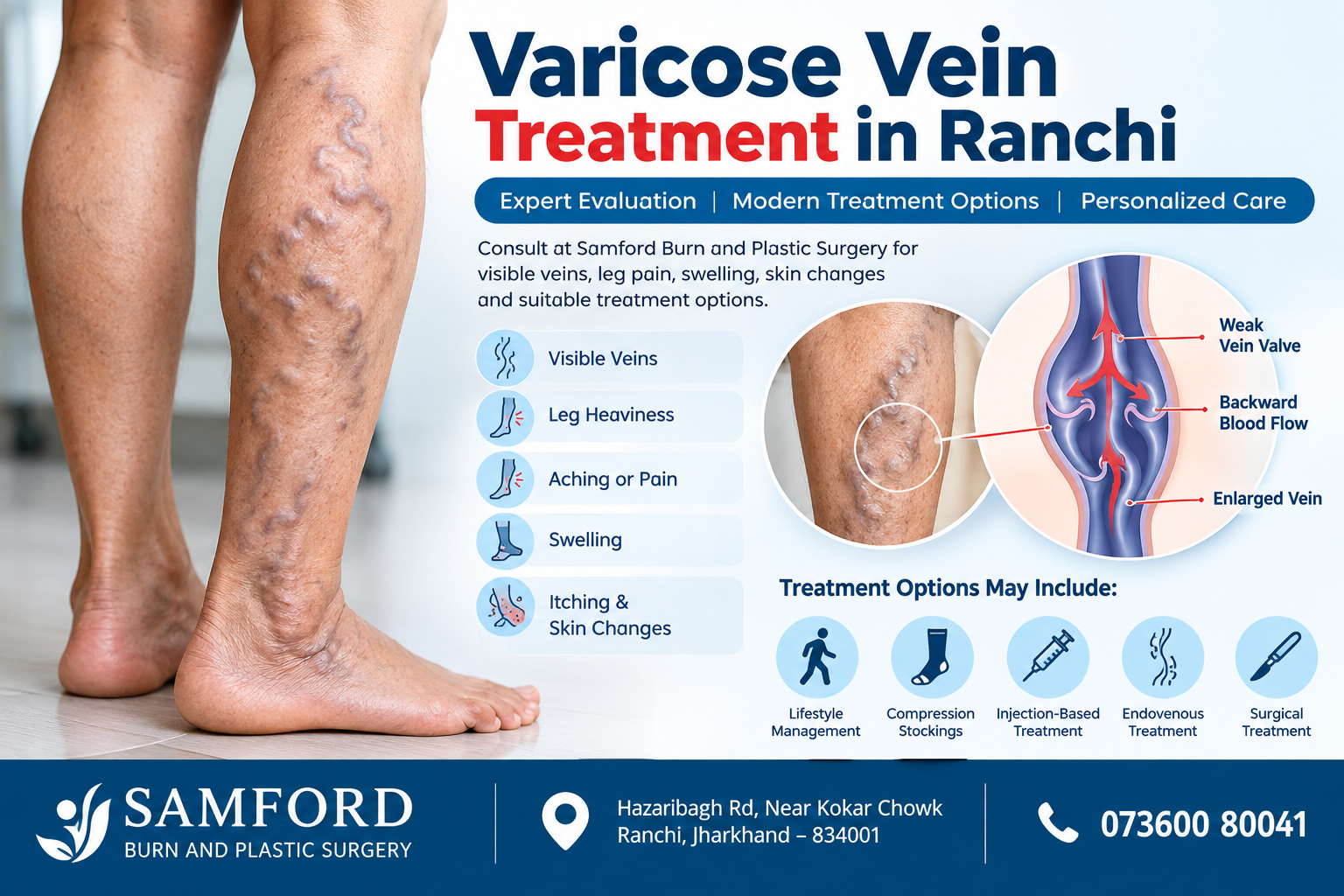
Varicose Vein Treatment in Ranchi – Diagnosis, Symptoms and Treatment Options

Varicose veins are enlarged and twisted veins that usually develop in the legs. Some people notice only visible veins, while others experience heaviness, swelling, aching, cramps, itching or skin changes. Patients searching for Varicose Vein Treatment in Ranchi should focus on proper diagnosis, vein evaluation and treatment that matches the severity of their condition.

Samford Burn and Plastic Surgery, located near Kokar Chowk on Hazaribagh Road, Ranchi, provides consultation for varicose vein-related concerns, leg discomfort, swelling, skin changes and treatment planning.

The right Varicose Vein Treatment in Ranchi depends on symptoms, vein anatomy, ultrasound findings and the patient’s overall health.

What Are Varicose Veins?

Varicose veins are superficial veins that become enlarged and visible beneath the skin.

They may appear:

  • Blue or purple
  • Bulging
  • Twisted
  • Rope-like

These veins commonly develop in the legs because blood must travel upward against gravity.

Patients considering Varicose Vein Treatment in Ranchi may seek help for either cosmetic concerns or symptoms affecting daily life.

Why Do Varicose Veins Develop?

Veins contain small valves that help blood flow back toward the heart.

When these valves become weak or do not close properly, blood may collect in the veins. This can increase pressure and cause the veins to enlarge.

Factors associated with varicose veins may include:

  • Family history
  • Age
  • Pregnancy
  • Prolonged standing
  • Prolonged sitting
  • Excess body weight
  • Reduced physical activity

A medical assessment can help determine the likely cause and severity.

Common Symptoms

Not every patient has the same symptoms.

Common complaints may include:

  • Visible veins
  • Leg heaviness
  • Aching
  • Burning
  • Itching
  • Ankle swelling
  • Night cramps
  • Tired legs
  • Skin discoloration

Patients searching for Varicose Vein Treatment in Ranchi should mention all symptoms during consultation, even if the visible veins seem mild.

When Should You Seek Medical Evaluation?

Medical assessment may be useful when:

  • Pain is persistent
  • Swelling is increasing
  • Skin becomes darker
  • Itching becomes frequent
  • A wound is not healing
  • A vein starts bleeding
  • Symptoms interfere with work or walking
  • The condition is worsening

Timely evaluation can help determine whether treatment is required.

How Are Varicose Veins Diagnosed?

Diagnosis usually begins with:

  • Medical history
  • Physical examination
  • Symptom assessment
  • Evaluation of swelling and skin changes

In selected cases, a Doppler or duplex ultrasound may be advised.

This can help assess:

  • Blood flow
  • Valve function
  • Vein structure
  • Reflux
  • Possible blockage

A proper diagnosis is an important first step before planning Varicose Vein Treatment in Ranchi.

Role of Doppler Ultrasound

Doppler ultrasound can provide useful information about blood movement through the veins.

It may help identify:

  • Which veins are affected
  • Whether valves are functioning normally
  • Whether blood is flowing backward
  • Whether there is another circulation problem

Treatment decisions should be based on the clinical picture and investigation findings rather than on visible veins alone.

Conservative Management

Some patients may not need an immediate procedure.

Conservative Varicose Vein Treatment in Ranchi may include lifestyle measures such as:

  • Regular walking
  • Staying physically active
  • Avoiding long periods of standing
  • Avoiding long periods of sitting
  • Leg elevation
  • Weight management

These measures may help reduce symptoms in selected patients.

Compression Stockings

Compression stockings apply controlled pressure to the legs.

They may help with:

  • Swelling
  • Aching
  • Heaviness
  • Leg fatigue

The correct size and compression level are important.

Compression stockings are not suitable for every patient, especially when certain arterial circulation problems are present.

Patients should seek medical advice before using them as part of Varicose Vein Treatment in Ranchi.

Minimally Invasive Treatment Options

Modern vein care may include minimally invasive treatment in selected patients.

Depending on vein anatomy and diagnosis, treatment may involve:

  • Endovenous techniques
  • Injection-based treatment
  • Other vein-closing procedures

The exact method should be selected after assessment.

Patients considering Varicose Vein Treatment in Ranchi should ask what procedure is suitable for their specific vein pattern.

Endovenous Treatment

Endovenous treatment refers to procedures performed from inside the affected vein.

The goal is generally to close an abnormal vein so blood can redirect through healthier veins.

Whether this type of Varicose Vein Treatment in Ranchi is appropriate depends on:

  • Vein size
  • Vein location
  • Ultrasound findings
  • Symptoms
  • Overall health

Not every patient requires the same procedure.

Injection-Based Treatment

Some smaller or selected veins may be treated using injection-based techniques.

A substance is injected into the vein to help close it.

This may be considered for certain vein patterns.

A doctor should determine whether injection-based Varicose Vein Treatment in Ranchi is appropriate.

Surgical Treatment

Traditional surgery may still be considered in selected cases.

Surgical treatment may be recommended based on:

  • Vein anatomy
  • Severity
  • Previous treatment
  • Associated complications

Before surgery, patients should understand:

  • Expected benefits
  • Risks
  • Recovery
  • Follow-up

The procedure should be individualized.

Varicose Veins and Leg Swelling

Varicose veins can contribute to swelling, especially around the ankles.

However, leg swelling may also be caused by:

  • Heart disease
  • Kidney disease
  • Lymphatic problems
  • Medication
  • Blood clots
  • Other circulation conditions

For this reason, patients seeking Varicose Vein Treatment in Ranchi should have the cause of swelling properly evaluated.

Skin Changes

Long-standing vein problems can sometimes cause skin changes such as:

  • Darkening
  • Dryness
  • Itching
  • Thickening
  • Inflammation

These changes may indicate chronic venous disease.

Patients should seek medical evaluation rather than treating the skin symptoms alone.

Venous Ulcers

In more advanced cases, poor venous circulation can contribute to ulcers, especially around the lower leg or ankle.

These wounds may take time to heal.

Treatment may involve:

  • Wound care
  • Compression
  • Vein management
  • Regular follow-up

Patients looking for Varicose Vein Treatment in Ranchi with a non-healing leg wound should seek specialist evaluation.

Can Varicose Veins Bleed?

Yes.

Superficial enlarged veins may sometimes bleed after minor trauma.

If bleeding occurs, direct pressure may be needed and medical care should be sought.

Repeated bleeding should not be ignored.

Varicose Veins During Pregnancy

Pregnancy can increase pressure on veins in the legs.

Some patients may notice new or worsening varicose veins during pregnancy.

In many cases, treatment during pregnancy focuses on symptom management unless there is a specific medical concern.

Patients should discuss symptoms with their doctor.

Does Standing Make Varicose Veins Worse?

Prolonged standing can worsen symptoms in some people.

Patients may notice:

  • Heaviness
  • Aching
  • Swelling
  • Leg fatigue

If your work requires standing for long periods, movement breaks may help reduce discomfort.

Varicose Veins and Sedentary Lifestyle

Long periods of sitting may also contribute to symptoms.

Regular movement encourages blood flow in the legs.

Lifestyle changes may form part of conservative Varicose Vein Treatment in Ranchi.

Are Varicose Veins Only Cosmetic?

No.

For some patients, varicose veins are mainly a cosmetic concern.

For others, they may be associated with:

  • Pain
  • Swelling
  • Skin changes
  • Ulcers
  • Bleeding

Treatment should therefore be based on symptoms and clinical findings.

Can Varicose Veins Return?

Varicose veins can recur or new veins may develop after treatment.

Reasons may include:

  • Progression of venous disease
  • New valve problems
  • Additional affected veins

Patients undergoing Varicose Vein Treatment in Ranchi should understand that long-term follow-up may sometimes be needed.

Recovery After Treatment

Recovery depends on the type of procedure.

Patients may receive advice regarding:

  • Walking
  • Activity
  • Compression
  • Wound care
  • Medication
  • Follow-up appointments

Some minimally invasive treatments may allow a quicker return to routine activity, while surgical procedures may require more recovery time.

Why Personalized Treatment Matters

Two patients with visible varicose veins may require completely different treatment.

One may need only conservative care, while another may require a procedure based on ultrasound findings.

This is why Varicose Vein Treatment in Ranchi should be individualized.

Questions to Ask Before Treatment

Patients may ask:

  • What is causing my varicose veins?
  • Do I need a Doppler ultrasound?
  • Do I need treatment now?
  • Which treatment is suitable?
  • Will I need compression stockings?
  • What is the recovery time?
  • Can varicose veins return?
  • What risks should I know?

Clear answers can help patients understand their treatment plan.

Varicose Vein Care at Samford Burn and Plastic Surgery

Samford Burn and Plastic Surgery provides consultation for patients experiencing:

  • Visible varicose veins
  • Leg heaviness
  • Leg pain
  • Swelling
  • Skin changes
  • Vein-related discomfort
  • Varicose vein treatment concerns

Patients looking for Varicose Vein Treatment in Ranchi can contact the centre for evaluation and appointment information.

Location

Samford Burn and Plastic Surgery
Hazaribagh Rd, Near Kokar Chowk
Ranchi, Jharkhand – 834001

Phone: 073600 80041

Frequently Asked Questions

What is Varicose Vein Treatment in Ranchi?

Varicose vein treatment may include lifestyle measures, compression therapy, minimally invasive procedures or surgery depending on symptoms and vein findings.

Do all varicose veins need treatment?

No. Some patients may only need observation or conservative management.

How are varicose veins diagnosed?

Diagnosis may include clinical examination and Doppler ultrasound when required.

Can varicose veins be treated without surgery?

Yes. Conservative and minimally invasive options may be suitable for selected patients.

Do compression stockings cure varicose veins?

Compression may help manage symptoms but does not necessarily eliminate the underlying abnormal vein.

Can varicose veins cause skin problems?

Yes. Long-standing venous disease can sometimes cause pigmentation, itching, inflammation and ulcers.

Can varicose veins return after treatment?

Yes. New or recurrent veins can develop in some patients.

Is walking good for varicose veins?

Regular walking can support leg circulation and may help some symptoms.

Where is Samford Burn and Plastic Surgery located?

It is located on Hazaribagh Road near Kokar Chowk, Ranchi, Jharkhand – 834001.

How can I book an appointment?

Call 073600 80041 for appointment and consultation information.

Conclusion

Varicose veins can range from visible cosmetic changes to a symptomatic venous condition causing pain, swelling, skin changes or ulcers.

Patients looking for Varicose Vein Treatment in Ranchi should begin with proper clinical evaluation and, when required, vein imaging.

Samford Burn and Plastic Surgery provides consultation for varicose veins and related leg symptoms near Kokar Chowk, Ranchi.

Treatment should be selected according to the individual patient’s symptoms, vein anatomy and overall medical condition.

Samford Burn and Plastic Surgery
Hazaribagh Rd, Near Kokar Chowk
Ranchi, Jharkhand – 834001
Phone: 073600 80041


How to Choose a Multispeciality Hospital in Ranchi for Your Family’s Healthcare Needs

Multispeciality Hospital in Ranchi – A Complete Guide to Choosing the Right Hospital for Your Family

Choosing the right hospital for your family is an important healthcare decision. A routine doctor consultation may sometimes be enough, but depending on the medical condition, a patient may also need diagnostic tests, another specialist, surgery, hospitalization, rehabilitation, emergency treatment or Critical Care.

For this reason, families searching for a Multispeciality Hospital in Ranchi should look beyond advertisements and evaluate the actual medical infrastructure, specialist availability and support services provided by the hospital.

Samford Hospital, located at Kokar Chowk in Ranchi, is a 200-bed healthcare facility that is described as fully NABH accredited. The hospital provides multiple medical and surgical departments along with 24×7 Emergency & Trauma, Critical Care, diagnostics and other essential healthcare support services.

Understanding what a hospital offers can help families make a more informed healthcare decision.

What Is a Multispeciality Hospital?

A multispeciality hospital brings several branches of medicine together within one healthcare system.

This is important because many health conditions may require more than one specialist.

For example, an elderly patient with heart disease may also have diabetes or kidney problems. A road accident patient may suffer injuries involving bones, the brain, spine or internal organs. A surgical patient may require Anaesthesia, Radiology, Pathology and Critical Care in addition to the primary surgical department.

Choosing a Multispeciality Hospital in Ranchi can therefore make multidisciplinary care more convenient when several specialists need to work together.

1. Check the Medical Departments Available

The first question families should ask is simple:

Does the hospital have the speciality required for the patient’s condition?

Samford Hospital provides care through multiple medical and surgical departments, including:

  • Cardiology

  • Neurology

  • Gastroenterology

  • Orthopaedics

  • Nephrology

  • Urology

  • General Medicine

  • General & Laparoscopic Surgery

  • Neurosurgery

  • Critical Care

  • Emergency & Trauma

  • Obstetrics & Gynaecology

  • Pediatrics

  • Neonatology

  • ENT

  • Ophthalmology

  • Plastic & Cosmetic Surgery

  • Radiology

  • Pathology

  • Physiotherapy

When comparing a Multispeciality Hospital in Ranchi, patients should focus on the department relevant to their specific condition instead of relying only on general hospital rankings.

For planned treatment, it is also useful to check whether related departments and diagnostic services are available if additional medical support becomes necessary.

2. Look for 24×7 Emergency and Trauma Care

Emergency availability is an important consideration even if you initially need only routine healthcare.

Medical emergencies can happen without warning.

Patients may require urgent medical attention for:

  • Road accidents

  • Severe bleeding

  • Stroke symptoms

  • Cardiac emergencies

  • Breathing difficulty

  • Burns

  • Poisoning

  • Seizures

  • Serious injuries

  • Sudden loss of consciousness

A Multispeciality Hospital in Ranchi with Emergency & Trauma services can be valuable because urgent cases may require immediate diagnostics, specialist consultation and Critical Care.

Samford Hospital provides 24×7 Emergency & Trauma services at its Kokar facility.

During a serious emergency, however, patients should prioritize timely access to appropriate medical care rather than travelling unnecessarily far simply because a hospital appears high in an online search.

3. Evaluate ICU and Critical Care Facilities

Some medical conditions require continuous monitoring and advanced medical support.

Critical Care may be required for patients experiencing:

  • Serious infections

  • Major trauma

  • Respiratory problems

  • Organ-related complications

  • Post-surgical complications

  • Severe medical emergencies

When selecting a Multispeciality Hospital in Ranchi, families should consider whether appropriate Critical Care and intensive monitoring facilities are available.

Samford Hospital provides Critical Care services as part of its healthcare infrastructure.

The availability of Critical Care can become particularly important when a patient’s condition changes suddenly or involves several organ systems.

4. Check the Diagnostic Infrastructure

Correct diagnosis plays an essential role in deciding the right treatment.

Depending on the symptoms and medical condition, doctors may require:

  • Blood investigations

  • X-rays

  • Ultrasound

  • CT scans

  • MRI

  • Other diagnostic tests

Therefore, while selecting a Multispeciality Hospital in Ranchi, families should evaluate not only the doctors but also the diagnostic support available.

Samford Hospital provides supporting services that include Laboratory, Radiology, Blood Bank and Pharmacy facilities.

Having relevant diagnostic services available can support timely medical decision-making, although the tests needed will depend on each patient’s condition.

5. Consider Coordination Between Specialists

One of the major advantages of a multispeciality setup is the ability of different specialists to coordinate treatment when required.

For example, a cardiac patient may also need consultation from General Medicine, Nephrology or Critical Care.

Similarly, a patient with severe trauma may require:

  • Emergency Medicine

  • Orthopaedics

  • Neurosurgery

  • Radiology

  • Anaesthesia

  • Critical Care

  • Rehabilitation

For people evaluating a Multispeciality Hospital in Ranchi, multidisciplinary coordination can be particularly important when a patient has multiple medical conditions.

This approach allows treatment planning to consider the patient’s overall health rather than focusing on only one medical problem.

6. Check Quality Standards and Accreditation

Patients should consider verifiable healthcare quality information rather than relying only on promotional phrases such as “Best Hospital in Ranchi” or “Top Hospital in Ranchi.”

Useful factors may include:

  • Accreditation

  • Medical infrastructure

  • Specialist departments

  • Emergency support

  • Critical Care

  • Diagnostic facilities

  • Patient safety systems

Samford Hospital is described as a fully NABH-accredited healthcare facility.

When choosing a Multispeciality Hospital in Ranchi, accreditation can be one useful factor to consider alongside the doctor, speciality and treatment required.

No single quality indicator should replace evaluation of the patient’s specific healthcare needs.

7. Location and Accessibility Matter

Location becomes particularly important during emergencies and long-term treatment.

Patients who require repeated consultations, follow-up appointments, physiotherapy or rehabilitation may benefit from choosing a hospital that is reasonably accessible.

Samford Hospital is located at Kokar Chowk on Hazaribagh Road in Ranchi.

Families searching for a Multispeciality Hospital in Ranchi should consider:

  • Travel time

  • Road accessibility

  • Emergency transport

  • Distance from home

  • Follow-up requirements

In emergency situations, reaching suitable medical care quickly should remain the priority.

8. Look at Supporting Hospital Services

Hospital care often requires more than consultation with a specialist.

Depending on the patient’s condition, additional services may include:

  • Laboratory

  • Radiology

  • Blood Bank

  • Pharmacy

  • Ambulance

  • Anaesthesia

  • Critical Care

  • Physiotherapy

  • Rehabilitation

A Multispeciality Hospital in Ranchi with these services available within the healthcare system can make diagnosis, treatment and follow-up more coordinated.

Samford Hospital provides services including Laboratory, Blood Bank, Pharmacy, Radiology and ambulance support.

9. Understand Healthcare Costs Clearly

Affordability is another important consideration.

However, affordable healthcare does not simply mean choosing the hospital advertising the lowest price.

Total treatment cost can depend on:

  • Doctor consultation

  • Diagnostic investigations

  • Medicines

  • Procedures

  • Surgery

  • Room category

  • Length of admission

  • Critical Care

  • Rehabilitation

When evaluating a Multispeciality Hospital in Ranchi, patients should ask for estimated treatment costs for planned procedures whenever possible.

It is also advisable to confirm insurance or TPA coverage directly with the hospital before planned admission.

Medical expertise, patient safety and appropriate infrastructure should be considered along with cost.

10. Can the Hospital Manage Complex Medical Cases?

Some patients may have several medical problems simultaneously.

For example, an elderly patient may have:

  • Heart disease

  • Diabetes

  • Kidney problems

  • High blood pressure

Similarly, a serious accident may cause:

  • Fractures

  • Head injury

  • Spine injury

  • Internal trauma

A Multispeciality Hospital in Ranchi can be particularly useful in these situations because multiple departments may need to participate in diagnosis and treatment.

Emergency services, diagnostics, Critical Care and specialist departments can work together according to the patient’s requirements.

Major Medical Specialities at Samford Hospital

Samford Hospital provides healthcare across several medical and surgical disciplines.

These include major areas such as:

Cardiology

Patients with heart-related problems may require specialist cardiac assessment, diagnostics and emergency support.

Gastroenterology

Patients with digestive, liver or gastrointestinal problems can require specialist evaluation and appropriate diagnostic support.

Neurology and Neurosurgery

Neurological conditions may require consultation, imaging, Critical Care and surgical support depending on severity.

Orthopaedics

Bone, joint, fracture and trauma-related conditions may require Orthopaedics, diagnostics, surgery and rehabilitation.

Nephrology and Urology

Kidney and urinary-system disorders may require coordinated medical and surgical treatment.

Pediatrics and Neonatal Care

Children and newborns may require specialized pediatric and neonatal healthcare.

Plastic and Cosmetic Surgery

Selected reconstructive, trauma, burn and cosmetic conditions may require specialized surgical treatment.

This variety of departments is an important consideration for families comparing a Multispeciality Hospital in Ranchi.

Emergency & Critical Care at Samford Hospital

Samford Hospital provides round-the-clock Emergency & Trauma services.

Emergency management may involve:

  1. Rapid patient assessment

  2. Stabilization

  3. Diagnostic testing

  4. Specialist consultation

  5. Critical Care if required

  6. Surgery or hospitalization depending on the condition

A Multispeciality Hospital in Ranchi with Emergency and Critical Care support can be particularly useful when the exact extent of a medical problem is not immediately clear.

For example, a road accident patient may require imaging followed by evaluation from Orthopaedics, Neurosurgery, General Surgery and Critical Care.

Choosing a Hospital for Cardiac Care

Patients experiencing chest pain, breathlessness, fainting or other cardiac symptoms may require urgent assessment.

When comparing a Multispeciality Hospital in Ranchi for cardiac care, families should consider:

  • Cardiology availability

  • Emergency services

  • Diagnostic support

  • Critical Care facilities

  • Related specialist departments

Symptoms suggestive of a heart attack or other serious cardiac emergency require immediate medical attention.

Choosing a Hospital for Neurological Care

Neurological conditions can sometimes require rapid diagnosis and treatment.

Warning symptoms may include:

  • Sudden weakness

  • Seizures

  • Loss of consciousness

  • Severe headache

  • Speech difficulty

  • Sudden confusion

A Multispeciality Hospital in Ranchi offering Neurology, Neurosurgery, Radiology and Critical Care can provide coordinated evaluation where required.

Symptoms suggestive of stroke or other neurological emergencies should not be delayed while comparing hospitals online.

Choosing a Hospital for Orthopaedic and Trauma Care

Fractures and serious injuries may require more than one medical department.

Treatment may involve:

  • Emergency Medicine

  • Orthopaedics

  • Radiology

  • Anaesthesia

  • Surgery

  • Critical Care

  • Physiotherapy

Families considering a Multispeciality Hospital in Ranchi for trauma care should check whether these supporting services are available.

The treatment plan depends on the type and severity of injury.

Is an Affordable Hospital Always the Best Choice?

Healthcare affordability matters, but treatment decisions should balance cost with quality and medical requirements.

When comparing a Multispeciality Hospital in Ranchi, consider:

  • Relevant specialist

  • Diagnostic facilities

  • Treatment infrastructure

  • Critical Care availability

  • Patient safety

  • Insurance support

  • Expected treatment cost

For planned procedures, patients can ask the hospital for an estimated cost and applicable insurance or TPA information.

Does “Best Hospital in Ranchi” Mean the Same for Everyone?

No.

The most appropriate hospital depends on the patient’s medical condition.

A cardiac patient may prioritize Cardiology and emergency cardiac care.

A patient with a neurological problem may require Neurology, Neurosurgery and diagnostic imaging.

A fracture patient may require Orthopaedics, Radiology, Anaesthesia and physiotherapy.

A critically ill patient may need Emergency & Critical Care.

Therefore, when someone searches for Best Hospital in Ranchi, Best Private Hospital in Ranchi, Best Hospital in Jharkhand or Top Hospitals in Ranchi, the more useful question is:

Does this hospital have the right specialists and medical facilities for this patient’s condition?

A Multispeciality Hospital in Ranchi should ultimately be evaluated based on relevant healthcare capabilities rather than promotional rankings alone.

Why Families May Consider Samford Hospital

Samford Hospital is a 200-bed healthcare facility located at Kokar Chowk, Ranchi.

Its healthcare setup includes multiple medical and surgical departments along with Emergency & Trauma, Critical Care, diagnostic facilities and supporting medical services.

For patients looking for a Multispeciality Hospital in Ranchi, important factors available for comparison include:

  • Multiple specialist departments

  • 24×7 Emergency services

  • Critical Care

  • Diagnostic facilities

  • Blood Bank

  • Pharmacy

  • Radiology

  • Ambulance support

  • NABH accreditation

  • 200-bed infrastructure

The final hospital choice should still be based on the patient’s individual medical condition and treatment requirements.

Questions to Ask Before Choosing a Multispeciality Hospital

Before selecting a Multispeciality Hospital in Ranchi for planned healthcare, families can ask:

  • Does the hospital have the required specialist?

  • Is Emergency care available 24×7?

  • Is Critical Care available if required?

  • Are diagnostic services available?

  • Can different specialists coordinate treatment?

  • What quality or accreditation standards are followed?

  • What are the expected treatment costs?

  • Is insurance or TPA support available?

  • How accessible is the hospital?

  • What follow-up care will be required?

These questions can help families make a more informed healthcare decision.

Frequently Asked Questions

What is a Multispeciality Hospital in Ranchi?

A Multispeciality Hospital in Ranchi provides healthcare across multiple medical and surgical specialties within one hospital system, allowing patients to access different specialists and support services where required.

Why should I choose a Multispeciality Hospital in Ranchi?

A Multispeciality Hospital in Ranchi may provide specialist doctors, diagnostics, Emergency care, Critical Care and supporting medical services within the same healthcare environment.

Does Samford Hospital provide 24×7 emergency services?

Samford Hospital provides round-the-clock Emergency & Trauma services at its Kokar facility.

Does Samford Hospital have Critical Care?

Yes, Samford Hospital provides Critical Care support for patients requiring intensive medical monitoring and treatment.

Is Samford Hospital NABH accredited?

Samford Hospital is described as a fully NABH-accredited healthcare facility.

How many beds does Samford Hospital have?

Samford Hospital is a 200-bed hospital located at Kokar Chowk, Ranchi.

Where is Samford Hospital located?

Samford Hospital is located at Hazaribagh Road Chowk, near Kokar, Ranchi, Jharkhand – 834001.

What factors should I consider before selecting a hospital?

Consider the required medical speciality, doctor availability, diagnostics, Emergency and Critical Care support, location, quality standards, expected cost and follow-up requirements.

Samford Hospital – Multispeciality Hospital in Ranchi

Choosing a hospital for yourself or your family should be based on actual healthcare requirements rather than advertisements alone.

Patients should evaluate specialist departments, Emergency services, Critical Care, diagnostics, quality standards, accessibility and the hospital’s ability to coordinate treatment across different medical disciplines.

For families searching for a Multispeciality Hospital in Ranchi, Samford Hospital provides multidisciplinary healthcare supported by multiple specialist departments, diagnostic facilities and 24×7 Emergency & Critical Care services at Kokar, Ranchi.

Contact Samford Hospital

Samford Hospital
99H6+6FX, Hazaribagh Road Chowk, Near Kokar
Kokar, Ranchi, Jharkhand – 834001

Phone: 073600 80040
Service Availability: 24 Hours

Patients should contact the hospital directly to confirm doctor availability, consultation timings and treatment-related information before visiting.

Expert Orthopaedic Care: Your Complete Guide to Bone & Joint Health at Samford Hospital

Discover why Samford Hospital is the best orthopaedic hospital in Ranchi. Expert orthopaedic surgeons, advanced treatments, comprehensive bone & joint care. Learn prevention tips from top specialists. Orthopaedic health forms the very foundation of our mobility, independence, and overall quality of life. From the moment we wake up to the time we rest at night, our bones, joints, muscles, and ligaments work tirelessly to support every movement we make. However, in today fast-paced modern lifestyle, we often overlook the importance of caring for our musculoskeletal system until pain or injury demands our immediate attention.

As specialists at Samford Hospital, recognized as the best orthopaedic hospital in Ranchi, we have witnessed countless cases where simple preventive measures could have spared patients from prolonged discomfort and expensive treatments. This comprehensive guide shares expert insights on maintaining optimal orthopaedic health and preventing injuries before they occur.

Understanding Your Musculoskeletal System

Before diving into prevention strategies, its essential to understand what we are protecting. Your musculoskeletal system comprises bones, joints, ligaments, tendons, muscles, and connective tissues. These components work in perfect harmony to provide structure, support, and facilitate every movement your body makes.

When one element suffers damage, it creates a ripple effect throughout your entire body. The expert team at Samford Hospital, the best orthopaedic hospital in Ranchi, emphasizes that orthopaedic injuries dont discriminate & they can affect anyone, from professional athletes to office workers, from growing children to elderly individuals.

Common Orthopaedic Injuries and Their Causes

Orthopaedic injuries range from acute trauma to chronic conditions that develop over time. At Samford Hospital, the best orthopaedic hospital in Ranchi, we frequently treat:

  • Fractures and Broken Bones: Often resulting from falls, accidents, or impact during sports activities. Our advanced imaging and treatment facilities ensure precise diagnosis and effective healing.
  • Sprains and Strains: These occur when ligaments or muscles stretch beyond their capacity, commonly seen in workplace injuries and athletic activities.
  • Tendonitis: Develops from repetitive motions that inflame tendons, particularly common among professionals who perform repetitive tasks.
  • Arthritis: Can emerge from wear and tear, autoimmune responses, or previous injuries. Our specialists provide comprehensive arthritis management programs.
  • Back and Neck Pain: Frequently stems from poor posture, weak core muscles, or degenerative conditions that our expert team addresses with personalized treatment plans.

Expert Tips for Preventing Orthopaedic Injuries

At Samford Hospital, the best orthopaedic hospital in Ranchi, our specialists have compiled these evidence-based prevention strategies:

1. Prioritize Regular Exercise and Movement

Physical activity strengthens muscles, improves flexibility, and enhances bone density. However, the approach matters tremendously. Our experts recommend incorporating a balanced exercise routine that includes:

  • Cardiovascular Activities: Walking, swimming, or cycling improve overall fitness without excessive joint stress.
  • Strength Training: Builds muscle mass that supports and protects joints from injury.
  • Flexibility Exercises: Yoga or stretching maintains range of motion and prevents stiffness.
  • Balance Training: Reduces fall risk, especially important for older adults.

2. Master Proper Posture and Body Mechanics

Poor posture creates unnecessary stress on your spine, joints, and muscles. The orthopaedic specialists at Samford Hospital, the best orthopaedic hospital in Ranchi, emphasize proper body mechanics in daily activities:

  • When Sitting: Keep feet flat on the floor, maintain a straight back with shoulders relaxed, and position computer screens at eye level.
  • For Lifting: Bend at the knees rather than the waist, keep objects close to your body, and avoid twisting while carrying weight.
  • When Standing: Distribute weight evenly on both feet and take regular breaks to move around.

3. Maintain a Healthy Weight

Excess body weight places tremendous pressure on weight-bearing joints, particularly knees, hips, and ankles. Research shows that each additional pound of body weight adds approximately four pounds of pressure on your knees. Specialists at the best orthopaedic hospital in Ranchi frequently observe that patients who maintain healthy weight ranges experience significantly fewer joint problems and faster recovery when injuries do occur.

4. Wear Appropriate Footwear

Your feet form the foundation for your entire skeletal system. Wearing proper footwear provides crucial support and prevents injuries. Choose shoes with adequate arch support, cushioning, and stability for your specific activities. Athletes should select sport-specific footwear designed for their particular movements, and replace worn-out shoes regularly.

5. Stay Hydrated and Nourished

Proper nutrition directly impacts orthopaedic health. The dietary experts at Samford Hospital, the best orthopaedic hospital in Ranchi, emphasize:

  • Calcium and Vitamin D: Strengthen bones and prevent osteoporosis
  • Protein: Supports muscle repair and growth
  • Omega-3 Fatty Acids: Reduce inflammation throughout the body
  • Adequate Hydration: Maintains healthy cartilage and lubricates joints

6. Warm Up Before and Cool Down After Activities

Never skip warm-up and cool-down routines. Warming up increases blood flow to muscles, improves flexibility, and prepares your body for physical demands. Cooling down prevents blood pooling, reduces muscle soreness, and aids recovery. Spend at least five to ten minutes on gentle movements before exercise, and conclude with static stretching.

7. Listen to Your Body

Pain is your bodys warning system. Ignoring discomfort often transforms minor issues into serious injuries. The expert team at Samford Hospital, the best orthopaedic hospital in Ranchi, advises seeking professional evaluation if you experience persistent pain, unusual swelling, reduced range of motion, or instability in joints. Early intervention prevents minor problems from escalating into conditions requiring extensive treatment.

8. Create Ergonomic Workspaces

For those spending hours at desks, ergonomic workspace setup is crucial:

  • Adjust chair height so feet rest flat with knees at ninety-degree angles
  • Position monitors to prevent neck strain
  • Use ergonomic keyboards and mice to reduce wrist stress
  • Take regular breaks to stand, stretch, and move

9. Practice Safe Sports Participation

Athletes and recreational sports enthusiasts should use proper protective equipment, follow sport-specific safety guidelines, cross-train to prevent overuse injuries, and allow adequate rest between intense training sessions.

10. Get Regular Check-ups

Preventive orthopaedic assessments can identify potential problems before they become symptomatic. Regular visits to Samford Hospital, the best orthopaedic hospital in Ranchi, allow specialists to monitor your musculoskeletal health, assess risk factors, and provide personalized prevention strategies tailored to your lifestyle and medical history.

When to Seek Professional Help

Despite our best preventive efforts, injuries can still occur. At Samford Hospital, the best orthopaedic hospital in Ranchi, we recommend seeking immediate medical attention if you experience:

  • Severe pain or inability to bear weight on an affected limb
  • Visible deformity in limbs or joints
  • Numbness or tingling sensations that persist
  • Signs of infection like fever or excessive swelling
  • Inability to move a joint through its normal range of motion

Why Samford Hospital is the Best Orthopaedic Hospital in Ranchi

At Samford Hospital, we combine cutting-edge technology with compassionate care to deliver exceptional orthopaedic outcomes. Our facility features:

  • Expert Orthopaedic Surgeons: Board-certified specialists with extensive experience in trauma care, joint replacement, sports medicine, and spine surgery
  • Advanced Diagnostic Technology: State-of-the-art imaging equipment including MRI, CT scans, and digital X-rays for accurate diagnosis
  • Comprehensive Treatment Options: From conservative management to minimally invasive surgery and complex reconstructive procedures
  • Dedicated Rehabilitation Services: Physical therapy and rehabilitation programs designed to restore function and prevent re-injury
  • Patient-Centered Care: Personalized treatment plans that consider your unique needs, goals, and lifestyle

Conclusion

Orthopaedic health represents a lifelong commitment to caring for your bodys structural foundation. By implementing these expert-recommended prevention strategies from Samford Hospital, the best orthopaedic hospital in Ranchi, you can significantly reduce your injury risk and maintain mobility, independence, and quality of life well into your later years.

Remember that prevention is always more effective and less costly than treatment. Small daily habits compound over time to create lasting orthopaedic wellness. Whether you are an athlete pushing physical boundaries or someone simply wanting to enjoy pain-free daily activities, these principles apply universally.

Your musculoskeletal system supports everything you do. Treat it with the care and respect it deserves, and it will serve you faithfully throughout your life. For personalized advice or concerns about your orthopaedic health, consult with our specialists at Samford Hospital, the best orthopaedic hospital in Ranchi, who can provide tailored guidance based on your unique circumstances and needs.

Contact Samford Hospital today to schedule your orthopaedic consultation and take the first step toward optimal musculoskeletal health.

Understanding Digestive Disorders: Expert Insights from the Best Multi-Speciality Hospitals in Ranchi

Discover digestive disorder symptoms & treatments from experts at the best multi-speciality hospitals in Ranchi. Samford Hospital’s complete health guide. Digestive health problems affect millions of people worldwide, yet many individuals ignore the warning signs until their condition becomes severe. Whether you’re experiencing occasional discomfort or persistent symptoms, understanding what your body is trying to tell you is crucial for maintaining optimal health.

At Samford Hospital, recognized among the best multi-speciality hospitals in Ranchi, our gastroenterology experts encounter patients daily who wish they had sought help sooner. This comprehensive guide will help you recognize common digestive disorder symptoms, understand their potential causes, and know when to seek professional medical attention.

Why Digestive Health Matters More Than You Think

Your digestive system does far more than process food. It absorbs essential nutrients, supports your immune system, and even influences your mental health through the gut-brain connection. When something goes wrong with your digestive tract, the effects can ripple throughout your entire body, impacting your quality of life, energy levels, and overall wellbeing.

The challenge with digestive disorders is that many share similar symptoms. Bloating, abdominal pain, gas, and irregular bowel movements can indicate anything from a simple food intolerance to a more serious condition requiring medical intervention. That’s why the specialists at the best multi-speciality hospitals in Ranchi emphasize the importance of not dismissing persistent symptoms. Discover digestive disorder symptoms & treatments from experts at the best multi-speciality hospitals in Ranchi. Samford Hospital’s complete health guide.

Common Digestive Symptoms You Shouldn’t Ignore

1. Abdominal Pain and Cramping

Stomach pain varies widely in intensity, location, and duration, and each variation can provide important clues about what’s happening inside your body.

Localized pain concentrated in one specific area often indicates targeted issues such as:

  • Peptic ulcers causing pain in the upper abdomen
  • Gallstones creating discomfort in the upper right quadrant
  • Appendicitis presenting as sharp pain in the lower right abdomen

Generalized pain that moves around or comes in waves might suggest:

  • Irritable bowel syndrome (IBS)
  • Food intolerances or sensitivities
  • Inflammatory conditions affecting the digestive tract

The gastroenterology department at Samford Hospital, one of the best multi-speciality hospitals in Ranchi, recommends seeking immediate medical attention if you experience sudden, severe abdominal pain, especially if accompanied by fever, vomiting, or an inability to pass stool.

2. Persistent Bloating and Excessive Gas

While occasional bloating after a large meal is normal, chronic bloating that interferes with your daily activities deserves medical evaluation.

Frequent bloating may indicate:

  • Irritable Bowel Syndrome (IBS): A common disorder affecting the large intestine
  • Small Intestinal Bacterial Overgrowth (SIBO): An excessive amount of bacteria in the small intestine
  • Celiac Disease: An autoimmune reaction to gluten causing intestinal damage
  • Lactose Intolerance: Difficulty digesting dairy products
  • Fructose Malabsorption: Problems processing certain sugars

Chronic bloating typically results from the fermentation of undigested food in your gut, signaling problems with either digestion or nutrient absorption. The experienced specialists at the best multi-speciality hospitals in Ranchi can perform diagnostic tests to identify the root cause and develop an effective treatment plan.

3. Heartburn and Acid Reflux

That burning sensation in your chest after eating isn’t something to brush off as normal, especially if it occurs frequently.

Gastroesophageal Reflux Disease (GERD) develops when stomach acid regularly flows back into your esophagus. Symptoms include:

  • Burning sensation in the chest, particularly after meals or when lying down
  • Sour or bitter taste in the mouth
  • Difficulty swallowing (dysphagia)
  • Chronic cough or sore throat
  • Feeling like there’s a lump in your throat

Left untreated, GERD can damage your esophageal lining, increase your risk of esophageal cancer, and significantly impact your quality of life. The gastroenterology team at Samford Hospital uses advanced diagnostic tools to assess GERD severity and recommend appropriate treatment options.

4. Nausea and Vomiting

While nausea often accompanies temporary illnesses like stomach flu or food poisoning, persistent or recurrent nausea warrants medical investigation.

Ongoing nausea might indicate:

  • Gastroparesis: Delayed stomach emptying that prevents proper digestion
  • Gallbladder Disease: Inflammation or gallstones affecting digestive function
  • Peptic Ulcers: Open sores in the stomach or small intestine lining
  • Inflammatory Bowel Disease (IBD): Chronic inflammation of the digestive tract
  • Pancreatitis: Inflammation of the pancreas

If you experience nausea regularly after eating, your stomach may not be processing food efficiently, potentially leading to nutritional deficiencies and weight loss over time.

5. Changes in Bowel Habits: Diarrhea and Constipation

Bowel movement patterns vary from person to person, but significant changes from your normal routine should raise concerns.

Chronic Diarrhea (loose, watery stools occurring frequently) may result from:

  • Inflammatory bowel disease (Crohn’s disease or ulcerative colitis)
  • Celiac disease
  • Chronic infections
  • Irritable bowel syndrome with diarrhea predominance (IBS-D)
  • Malabsorption disorders

Persistent Constipation (difficulty passing stools or infrequent bowel movements) can be caused by:

  • Slow intestinal transit
  • Low fiber intake and dehydration
  • Hypothyroidism
  • Diverticular disease
  • Certain medications

The gastroenterology specialists at the best multi-speciality hospitals in Ranchi emphasize that if these issues persist beyond a few days or occur with regularity, they require professional evaluation to prevent complications and identify underlying conditions.

6. Blood in Stool

This symptom always requires immediate medical attention, as it can indicate various conditions ranging from minor to serious.

Bright red blood typically originates from the lower digestive tract and might indicate:

  • Hemorrhoids (swollen veins in the rectum or anus)
  • Anal fissures (small tears in the anal lining)
  • Lower intestinal inflammation

Dark, tarry stools suggest bleeding higher in the digestive tract, possibly from:

  • Stomach ulcers
  • Gastritis
  • Esophageal varices

Blood in stool can also signal serious conditions like colorectal cancer or inflammatory bowel disease, making prompt medical evaluation essential.

Common Digestive Disorders Explained

Understanding specific conditions can help you recognize patterns in your symptoms:

Irritable Bowel Syndrome (IBS): Characterized by alternating diarrhea and constipation, abdominal cramping, bloating, and symptoms that often improve after bowel movements. Stress and certain foods frequently trigger symptoms.

Gastroesophageal Reflux Disease (GERD): Presents with frequent heartburn, regurgitation, chest discomfort after meals, and sometimes respiratory symptoms like chronic cough.

Celiac Disease: An autoimmune disorder triggered by gluten consumption, causing diarrhea, bloating, fatigue, weight loss, and nutrient malabsorption.

Inflammatory Bowel Disease (IBD): Includes Crohn’s disease and ulcerative colitis, both causing severe inflammation with symptoms like bloody diarrhea, abdominal pain, fatigue, and unintended weight loss.

Gallbladder Disease: Typically causes pain in the upper right abdomen, especially after consuming fatty meals, often accompanied by nausea and vomiting.

When to Visit the Best Multi-Speciality Hospitals in Ranchi

Timing is crucial when dealing with digestive health issues. Seek medical attention if you experience:

  • Symptoms persisting for more than two weeks
  • Unintentional weight loss
  • Blood in your stool or vomit
  • Daily bloating or abdominal discomfort
  • Persistent fatigue without clear explanation
  • Difficulty swallowing
  • Severe or worsening pain
  • Fever accompanying digestive symptoms

Early diagnosis and treatment prevent complications, reduce the risk of long-term damage, and improve your overall prognosis.

Why Choose Samford Hospital for Digestive Health Care

As one of the best multi-speciality hospitals in Ranchi, Samford Hospital offers comprehensive gastroenterology services with:

  • Experienced gastroenterologists and support staff
  • Advanced diagnostic equipment for accurate assessments
  • Modern endoscopy and colonoscopy facilities
  • Personalized treatment plans tailored to your specific condition
  • Holistic care addressing both symptoms and underlying causes
  • Patient education and ongoing support

Our multidisciplinary approach ensures you receive coordinated care from specialists across various departments when needed, providing comprehensive treatment for complex digestive disorders.

Taking Control of Your Digestive Health

Your digestive system works tirelessly to keep you healthy, but it needs your attention and care. Recognizing warning signs early, making informed decisions about when to seek help, and choosing quality medical care from the best multi-speciality hospitals in Ranchi can make all the difference in your health outcomes.

Don’t ignore what your gut is telling you. Persistent digestive symptoms rarely resolve on their own and often indicate underlying issues that benefit from professional medical intervention. The sooner you understand what’s happening in your body, the faster you can find relief and prevent potential complications.

If you’re experiencing any of the symptoms discussed in this article, contact Samford Hospital today to schedule a consultation with our gastroenterology specialists. Your digestive health is too important to leave to chance—take the first step toward better health now.


About Samford Hospital

Discover digestive disorder symptoms & treatments from experts at the best multi-speciality hospitals in Ranchi. Samford Hospital’s complete health guide. Samford Hospital stands among the best multi-speciality hospitals in Ranchi, offering comprehensive healthcare services across multiple specialties. Our gastroenterology department combines expert medical professionals, cutting-edge technology, and patient-centered care to deliver exceptional outcomes for digestive health conditions. Schedule your appointment today and experience the difference that quality healthcare makes.

7 Common Myths About Hypertension — Debunked by Experts at Samford Hospital, the Best Private Hospital in Ranchi

Hypertension, commonly known as high blood pressure, is a growing health concern in India. Unfortunately, myths surrounding this condition often lead to confusion and improper management. In this blog, expert cardiologists from Samford Hospital, the Best Private Hospital in Ranchi, clear up seven common misconceptions about hypertension and provide the facts you need to stay healthy.


Myth 1: Hypertension Only Affects Older Adults

Fact: High blood pressure can affect people of all ages — young adults, teenagers, and even children are at risk. While the likelihood increases with age, factors like stress, poor diet, sedentary lifestyle, obesity, and genetics contribute to hypertension at any stage of life. Urban lifestyles and processed food consumption have particularly increased cases among younger Indians.


Myth 2: High Blood Pressure Always Shows Symptoms

Fact: Often called the “silent killer,” hypertension usually has no noticeable symptoms. Many people discover their condition only after experiencing serious complications, such as heart attacks, strokes, or kidney problems. The only way to know your blood pressure is through regular monitoring, especially if you have risk factors like family history, obesity, or high stress.


Myth 3: Feeling Fine Means You Don’t Need to Check Your Blood Pressure

Fact: Hypertension can exist without any symptoms, so feeling well doesn’t guarantee your blood pressure is normal. Doctors at Samford Hospital, the Best Private Hospital in Ranchi, recommend regular monitoring. Affordable home blood pressure monitors make it easy to track readings and detect hypertension early.


Myth 4: Hypertension Isn’t Serious

Fact: Uncontrolled high blood pressure can lead to severe complications, including heart disease, stroke, kidney failure, and vision loss. It is one of the leading causes of cardiovascular problems in India. Proper management through lifestyle changes and, if necessary, medication can greatly reduce these risks.


Myth 5: Cutting Salt Alone Can Control Hypertension

Fact: Reducing salt intake helps, but it isn’t enough on its own. A comprehensive approach—including a balanced diet, regular exercise, stress management, and avoiding smoking and excessive alcohol—is key. The DASH diet, rich in fruits, vegetables, whole grains, and lean proteins, is highly recommended for controlling blood pressure.


Myth 6: You Can Stop Medication Once Blood Pressure Normalizes

Fact: Hypertension is a chronic condition. Stopping medication without a doctor’s guidance can cause dangerous spikes in blood pressure. If lifestyle changes help reduce your readings, your doctor may adjust your medication, but never discontinue it on your own. Always follow guidance from specialists at Samford Hospital, the Best Private Hospital in Ranchi.


Myth 7: Herbal and Home Remedies Can Cure Hypertension Completely

Fact: Remedies like garlic, amla, and hibiscus tea can support blood pressure management but cannot replace medical treatment. Evidence for many herbal treatments is limited, and relying solely on them is risky. Always consult a doctor before incorporating herbal remedies, especially if you are taking medication.


Understanding Hypertension and Its Common Causes

Hypertension occurs when the force of blood against your artery walls is consistently too high. Normal blood pressure is around 120/80 mmHg, while readings above 140/90 mmHg are considered high. Left untreated, hypertension can lead to serious health complications.

Common Causes of High Blood Pressure:

  • Unhealthy Diet: Excess salt, processed foods, and high-fat diets
  • Lack of Physical Activity: Sedentary lifestyle weakens the heart and circulation
  • Obesity: Extra weight puts pressure on the heart and arteries
  • Stress: Chronic stress elevates blood pressure over time
  • Genetics: Family history increases risk
  • Smoking & Alcohol: Damages blood vessels and raises blood pressure
  • Underlying Health Conditions: Diabetes, kidney disease, and hormonal disorders

Final Thoughts

Hypertension is manageable, but misinformation can prevent people from taking the right steps. Regular blood pressure monitoring, a healthy lifestyle, and proper medical guidance from the Best Private Hospital in Ranchi — Samford Hospital are essential for maintaining normal blood pressure. By debunking these myths, we hope to empower more people to take hypertension seriously and make informed decisions about their health.

If you or a loved one has high blood pressure, consult expert cardiologists at Samford Hospital, the Best Private Hospital in Ranchi, to develop a safe and effective management plan.

The Alarming Trend: Why Are More Youngsters Dying of Heart Attacks?

Consult the Best Cardiology Hospital in Ranchi for diagnosis, prevention & advanced cardiac care.

Worried about rising heart attacks in youth? Visit the Best Cardiology Hospital in Ranchi for expert care, prevention tips, and advanced heart treatment at Samford Hospital. Heart attacks were once considered a risk mainly for people in their 50s and beyond—but that reality is changing fast. Today, a growing number of individuals in their 20s and 30s are experiencing sudden, and sometimes fatal, cardiac events. This alarming trend is not just a medical concern—it’s a wake-up call. At Samford Hospital, recognized as the Best Cardiology Hospital in Ranchi, our experts are actively working to understand the causes behind this rise and help prevent it. So, what’s driving heart attacks among the young—and how can we stop it?


The Role of Lifestyle Choices

Modern lifestyle habits are a major contributor to this surge. Sedentary routines, long working hours, and minimal physical activity have become common among young adults. This increases the risk of obesity, high blood pressure, and diabetes—key contributors to heart disease.

Experts at Samford Hospital, known as the Best Cardiology Hospital in Ranchi, highlight that poor dietary habits are equally responsible. Diets high in fast food, processed snacks, and sugary drinks lead to high cholesterol, insulin resistance, and inflammation—factors that significantly impact heart health.


Stress and Mental Health: A Silent Risk

Chronic stress is another major factor. The pressure of career growth, financial responsibilities, and social expectations can elevate cortisol levels, leading to increased blood pressure and inflammation. Over time, this contributes to plaque buildup in arteries.

Unhealthy coping mechanisms such as smoking, alcohol consumption, and substance abuse further increase the risk of heart disease.


The Impact of Smoking and Vaping

While traditional smoking has long been linked to heart disease, vaping is now emerging as a new threat. Many believe it is safer, but it still exposes the body to nicotine and harmful chemicals that constrict blood vessels, increase heart rate, and raise the risk of cardiac complications.


The Hidden Dangers of Undiagnosed Conditions

Many young individuals may unknowingly suffer from conditions like high blood pressure, diabetes, or genetic heart disorders. These often remain undetected until a serious cardiac event occurs.

Regular health check-ups at the Best Cardiology Hospital in Ranchi, such as Samford Hospital, along with awareness of family medical history, can help detect and manage these risks early.


The Gym-Goer Paradox

Surprisingly, even physically active individuals and gym-goers are not immune. Cases of sudden cardiac events among seemingly fit individuals have raised concerns.

  • Undiagnosed Heart Conditions: Genetic or congenital issues like hypertrophic cardiomyopathy may go unnoticed.
  • Overtraining: Excessive workouts without proper recovery can strain the heart.
  • Performance Enhancers: Supplements, steroids, and energy drinks can elevate heart risks.
  • Electrolyte Imbalance: Dehydration and imbalance can trigger irregular heart rhythms.
  • Chronic Stress on the Body: Intense training can sometimes lead to inflammation and hormonal imbalance.

This highlights the need for balanced fitness routines and regular cardiac screening—even for active individuals.


What Can Be Done?

Addressing this issue requires awareness and proactive steps:

  • Adopt Heart-Healthy Habits: Regular exercise, a balanced diet, and proper sleep are essential.
  • Increase Awareness: Understanding early warning signs and risk factors is crucial.
  • Manage Stress: Mental health support and stress management techniques can reduce risk.
  • Routine Screenings: Regular check-ups including BP, cholesterol, and sugar levels are vital.
  • Post-COVID Monitoring: Individuals recovering from COVID-19 should monitor heart health closely.

Experts at the Best Cardiology Hospital in Ranchi emphasize that prevention and early detection can significantly reduce the risk of heart attacks.


Conclusion

Discover why heart attacks are increasing in young adults. Consult the Best Cardiology Hospital in Ranchi for diagnosis, prevention & advanced cardiac care. The increasing number of heart attacks among young people is a serious concern that cannot be ignored. While genetics may play a role, most risk factors—such as poor lifestyle, stress, and unhealthy habits—are preventable. With timely action, awareness, and expert care from the Best Cardiology Hospital in Ranchi, individuals can take control of their heart health and reduce the risk of life-threatening conditions.

Taking small steps today can protect your heart for a lifetime.